Ladakh: The Land of High Passes
Rachel and I travelled to Ladakh in the Indian Himalaya to create the travel section for Another Escape's Altitudes Volume, working with Kamalan, a cultural agency that curates immersive journeys to India. Leh sits at 3,256 metres, high enough that carrying a camera bag up a monastery staircase becomes a considered decision. Four stories came home with us: the land, its herdspeople, its food, and what its farmers know that the rest of us have forgotten.
Chapter I
The Land of High Passes
Ladakh is a place rich in history and culture shaped by the rippling landscapes of some of Central Asia's great mountain ranges.
A terraced village on the Indus River, which snakes through Ladakh. Its jade waters, milky with silt and glacier melt, feed the pockets of oases along its banks.
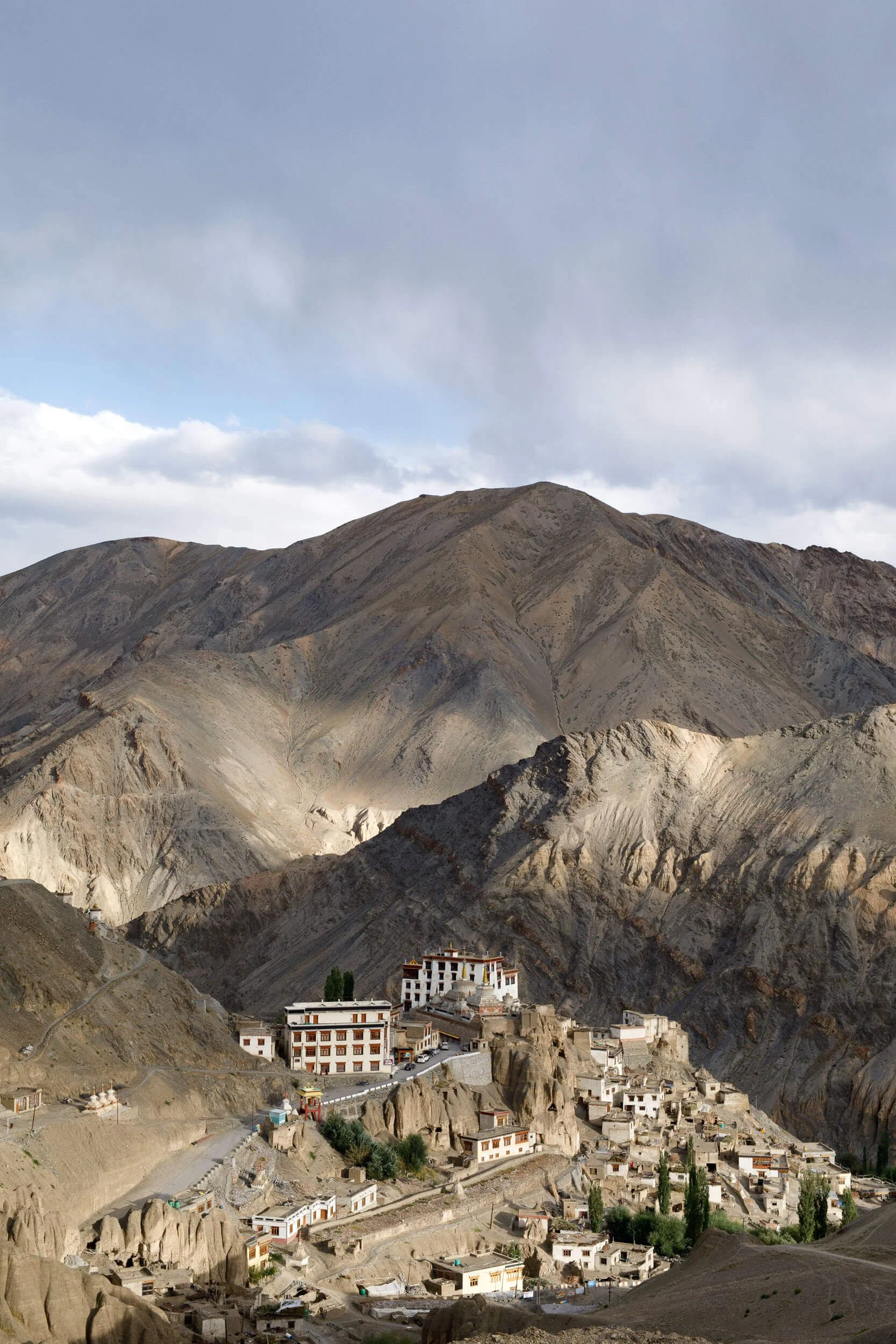
Lamayuru Monastery and its surrounding settlement, home to one of the oldest monasteries in Ladakh, dating back to the 10th century.
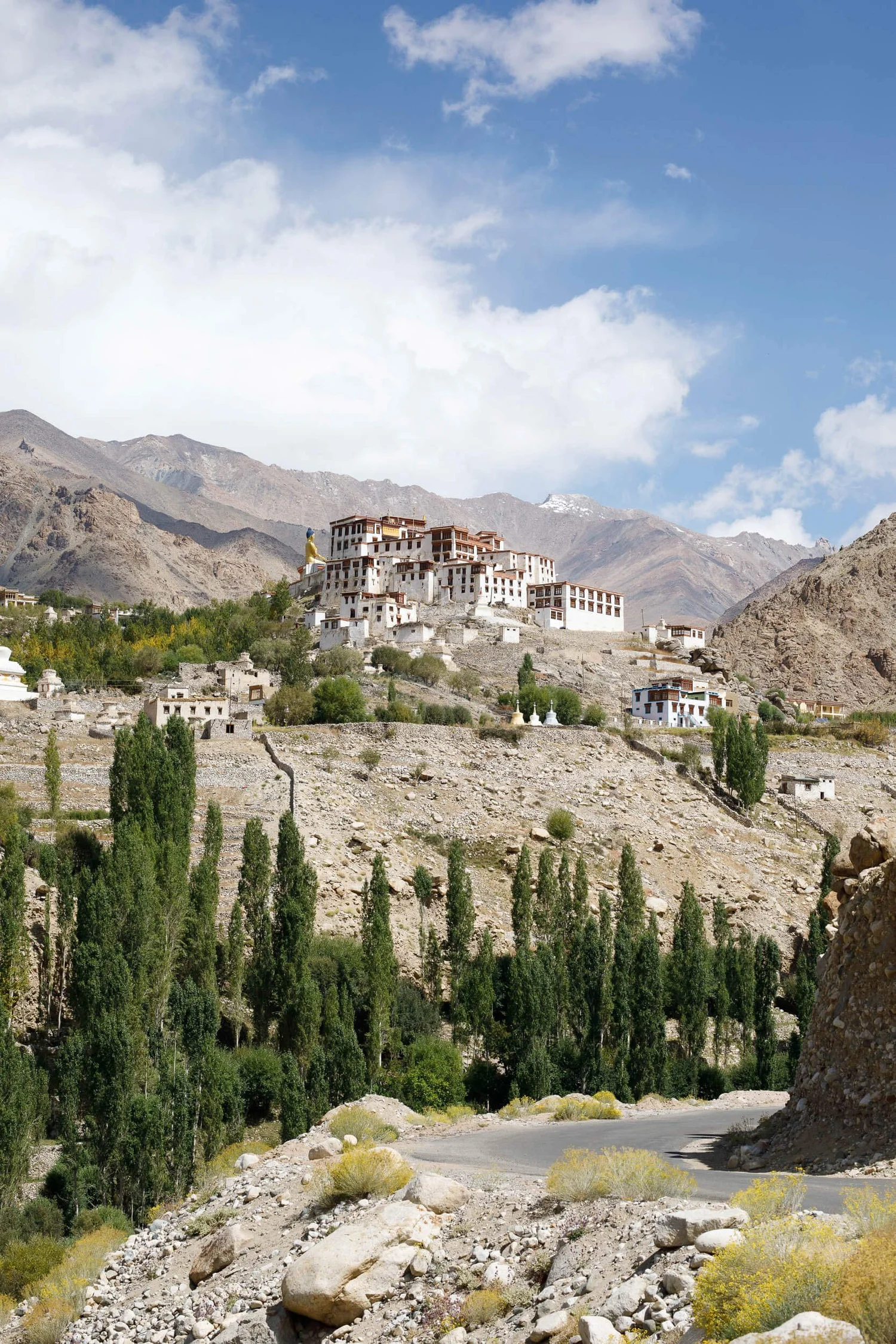
Likir Monastery, Ladakh.
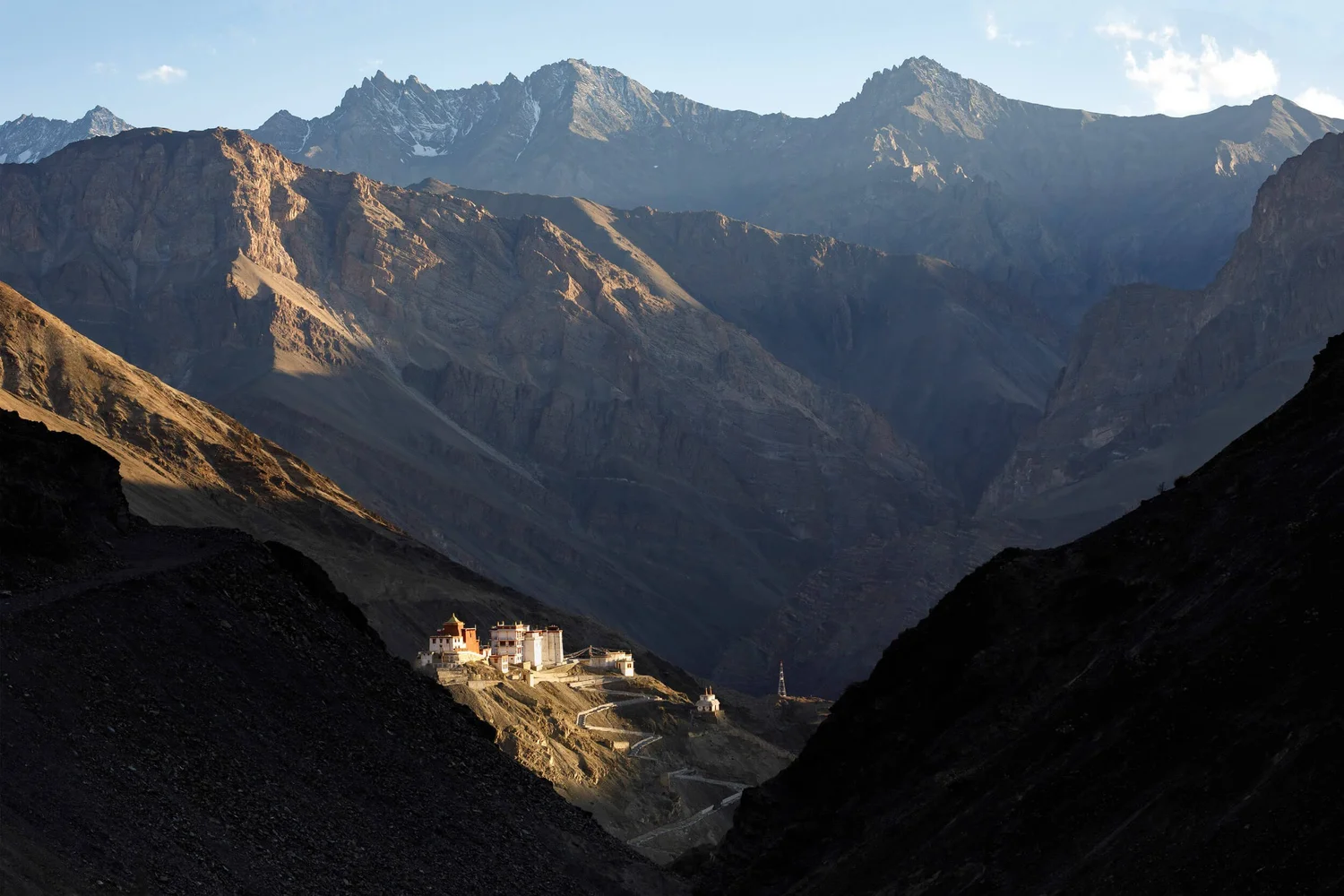
To the north and west of Ladakh lies Pakistan; to the east, China. Most of the borders around the former Princely State of Jammu and Kashmir have never been formally agreed, leaving Ladakh a highly militarised region. Yet it is largely only on the fringes that tension is ever felt, and Ladakh remains a safe and peaceful place, despite the heavy military presence.
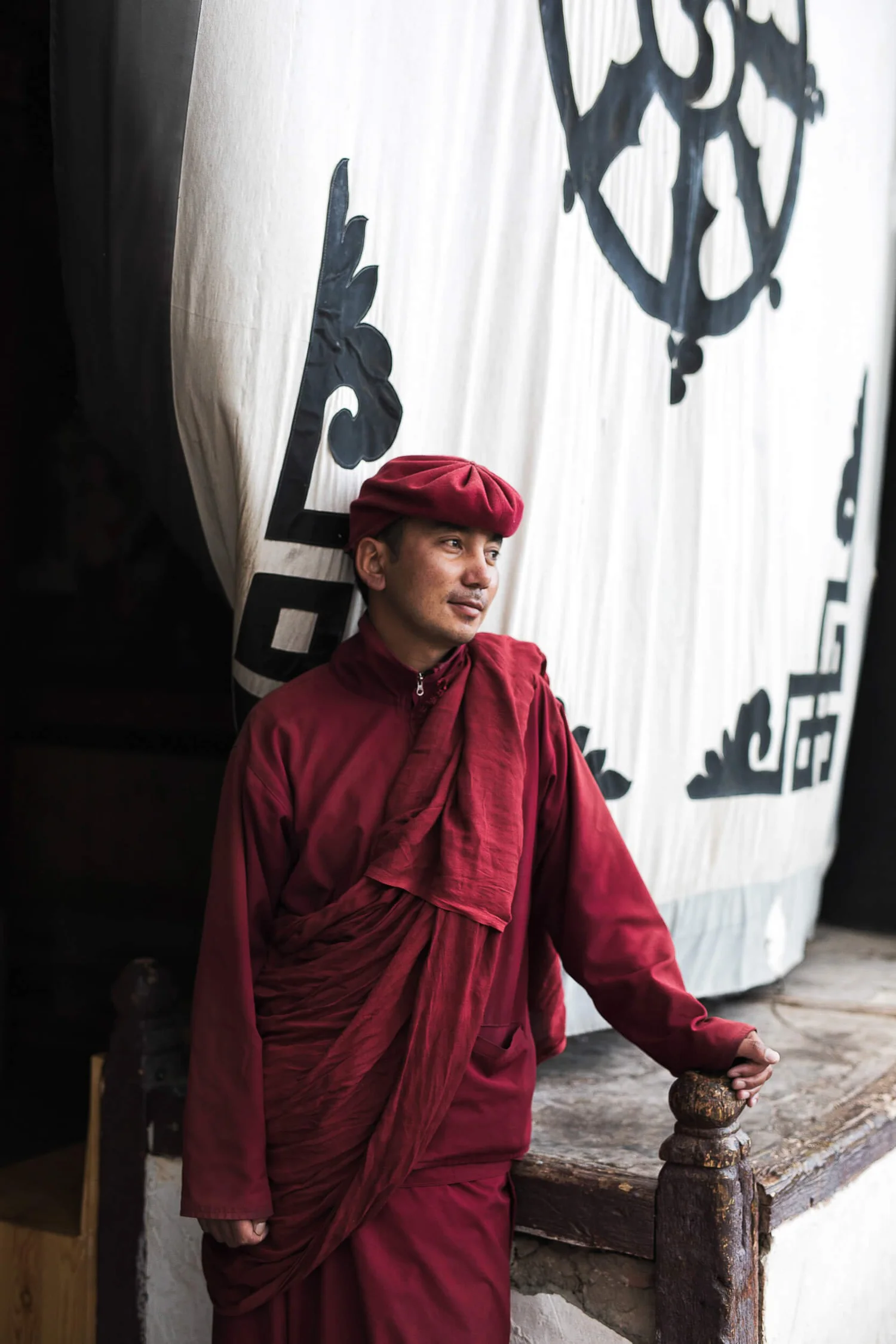
Monk at Hemis Monastery.
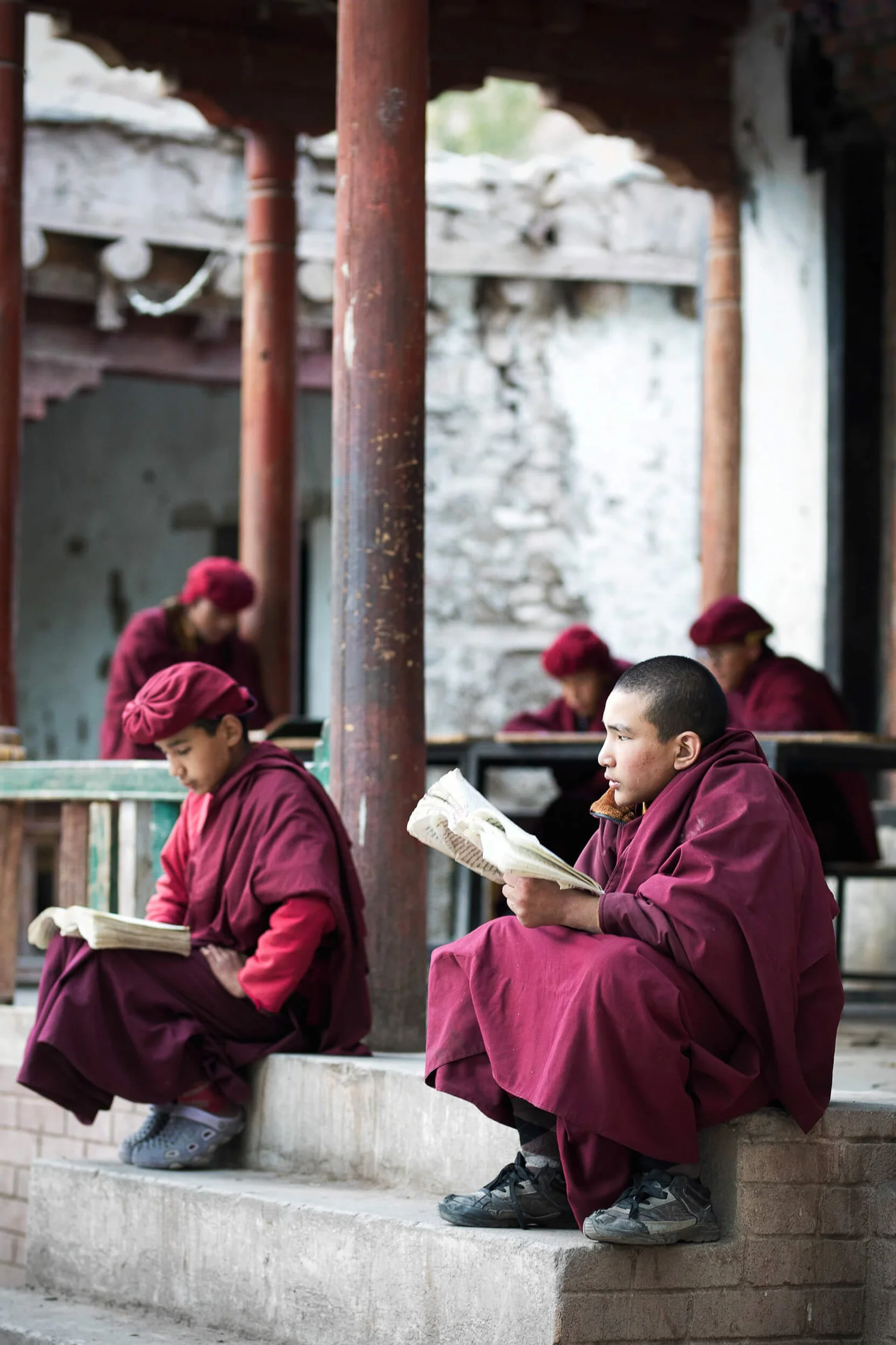
Student monks practising at Hemis Monastery.
A prayer wheel on the roadside close to the Tingmosgang Monastery, just outside Temisgam village. Prayer wheels, like chortens, should only ever be moved around clockwise, even if it diverts the traveller off course.
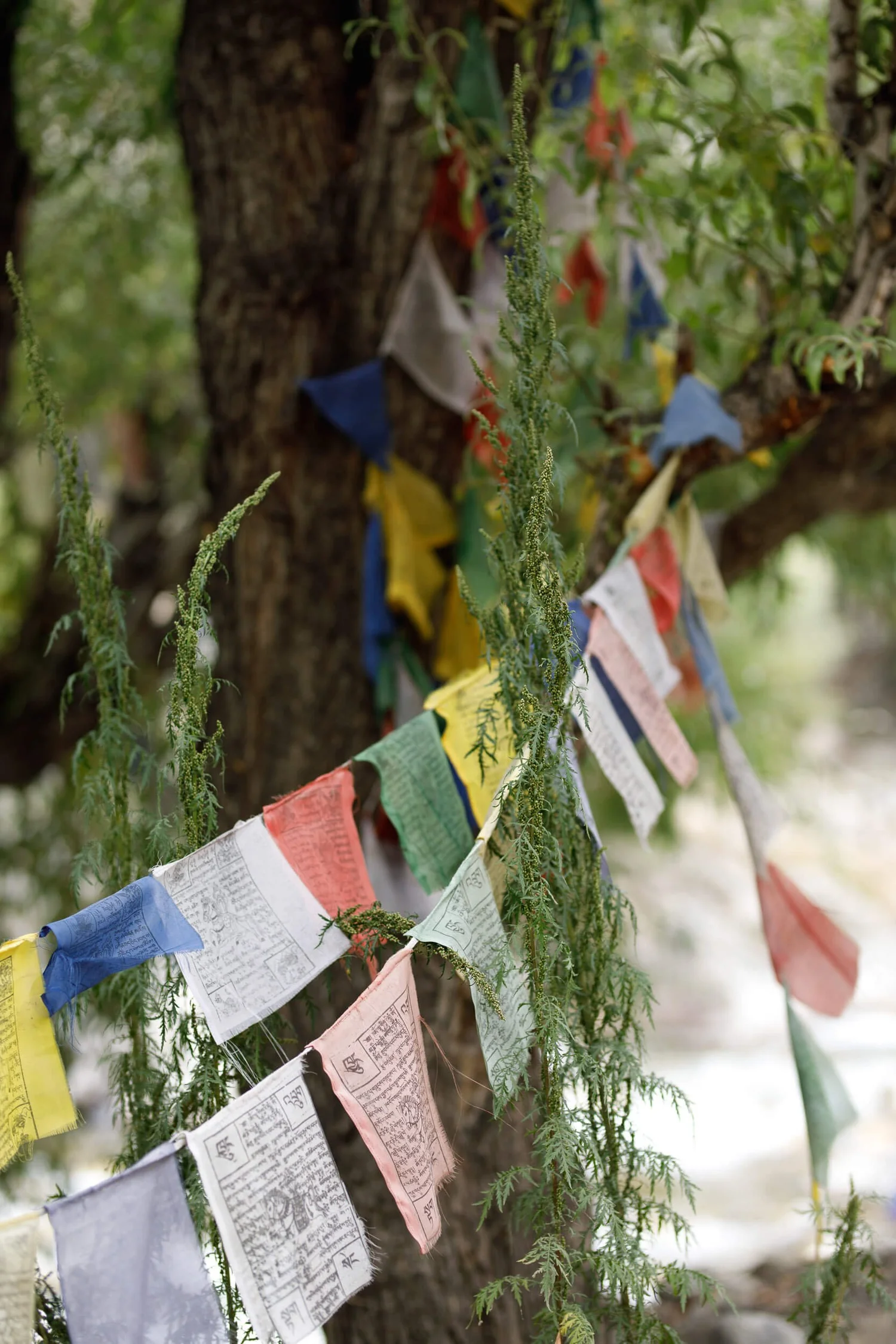
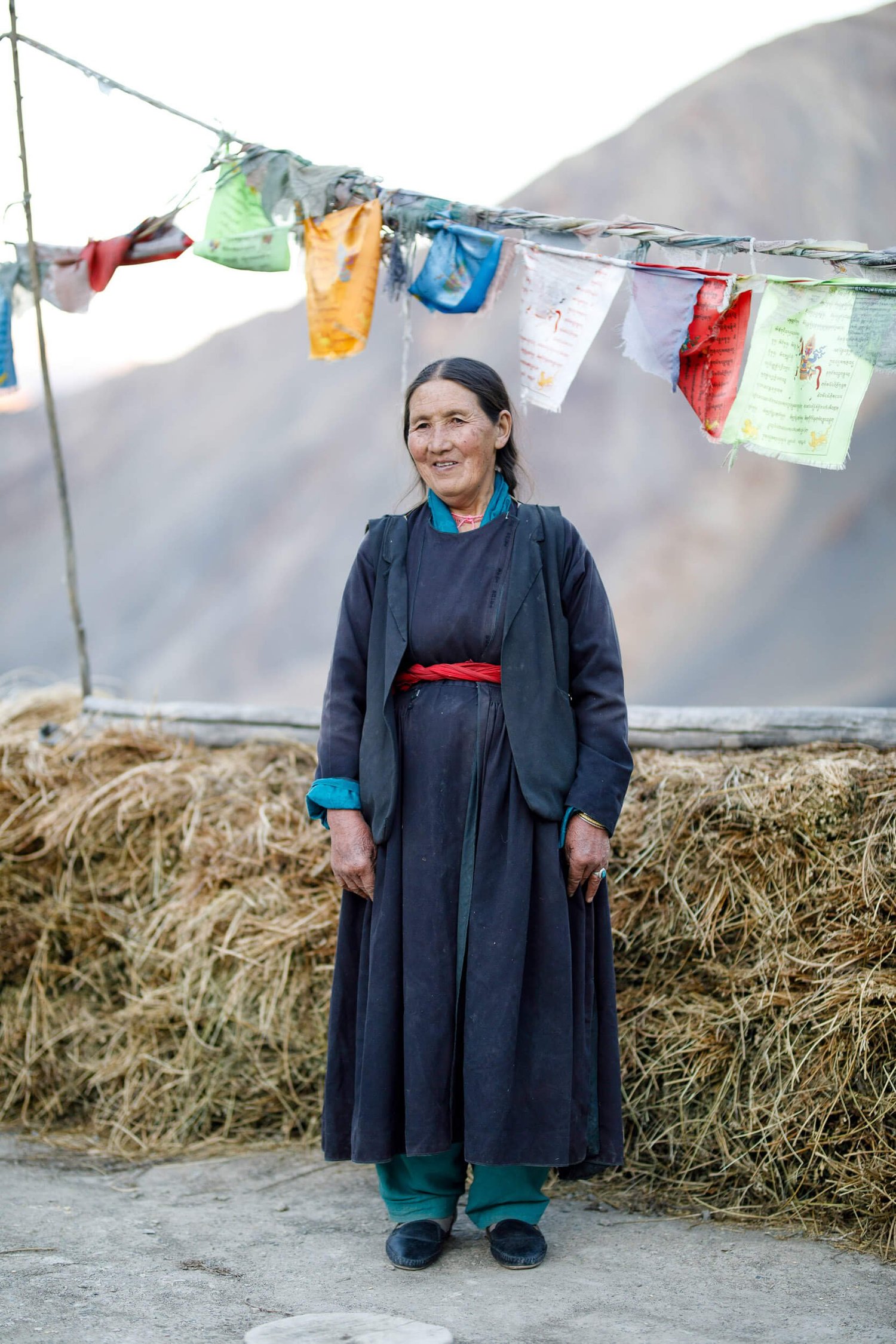
A Ladakhi lady stood on her rooftop in front of prayer flags.
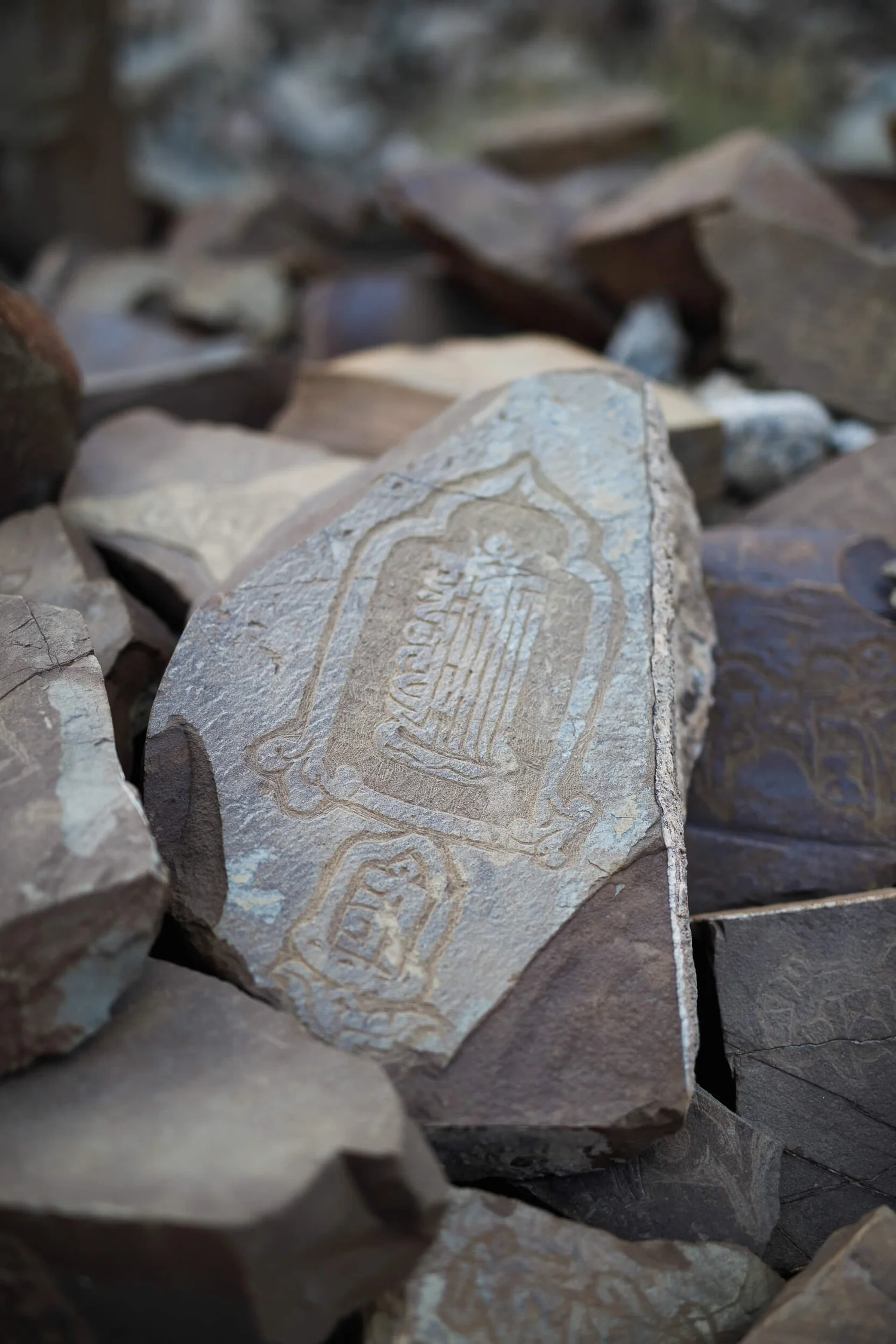
Running long lengths of the landscape, mani walls are composed of stacked stones, each engraved with a prayer.
Chapter II
Living at the Roof of the World
For centuries, the nomadic herdspeople of the Chang-thang high plateau, known as the Chang-pa, have endured living in some of the hardest conditions on the planet. Where others would struggle to survive, they have thrived.
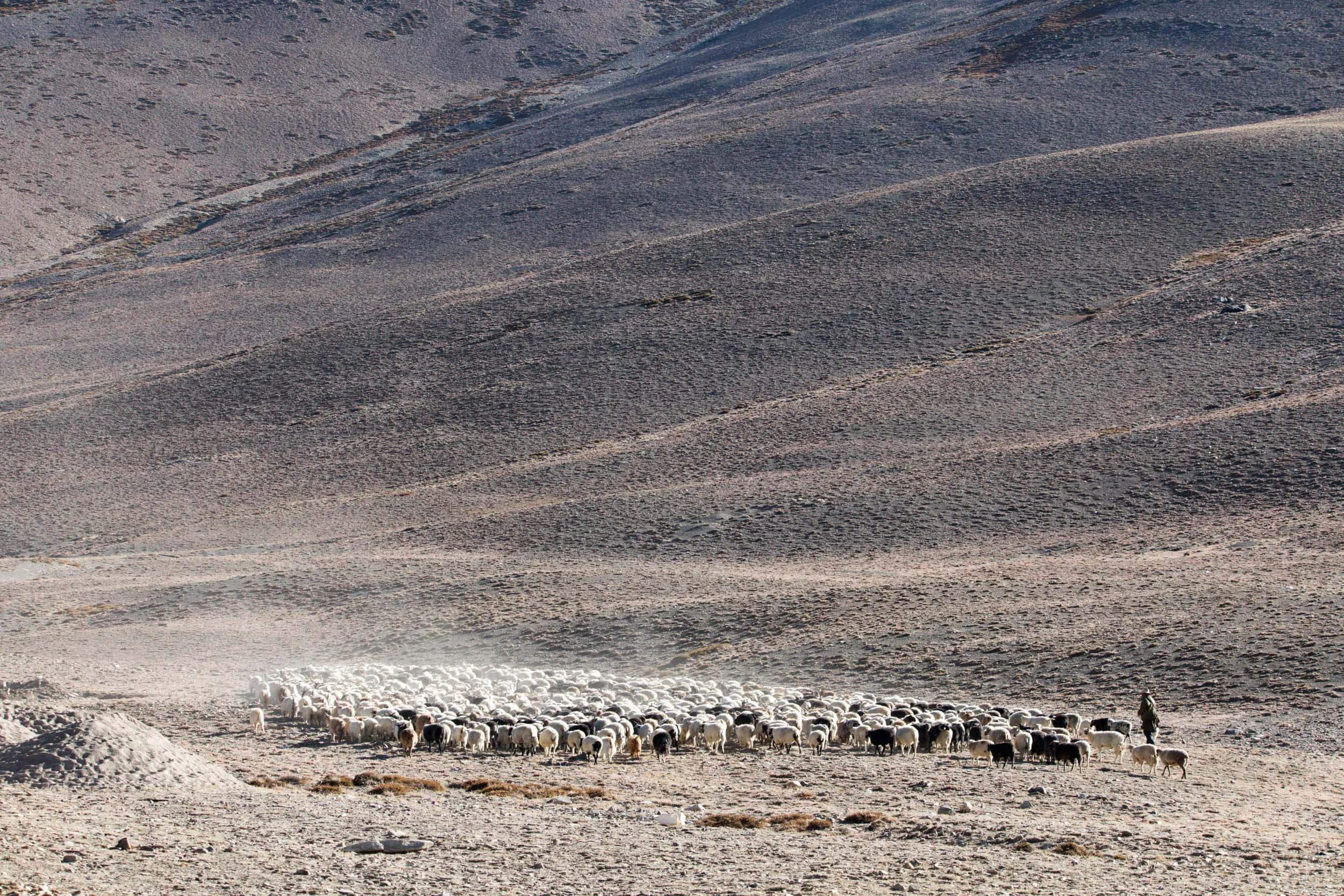
Animal husbandry is at the heart of the Chang-pa's livelihood, particularly the Chang-ra goats. The fine fleece combed from their undercoat, known as pashm, is the prized raw fibre of cashmere.
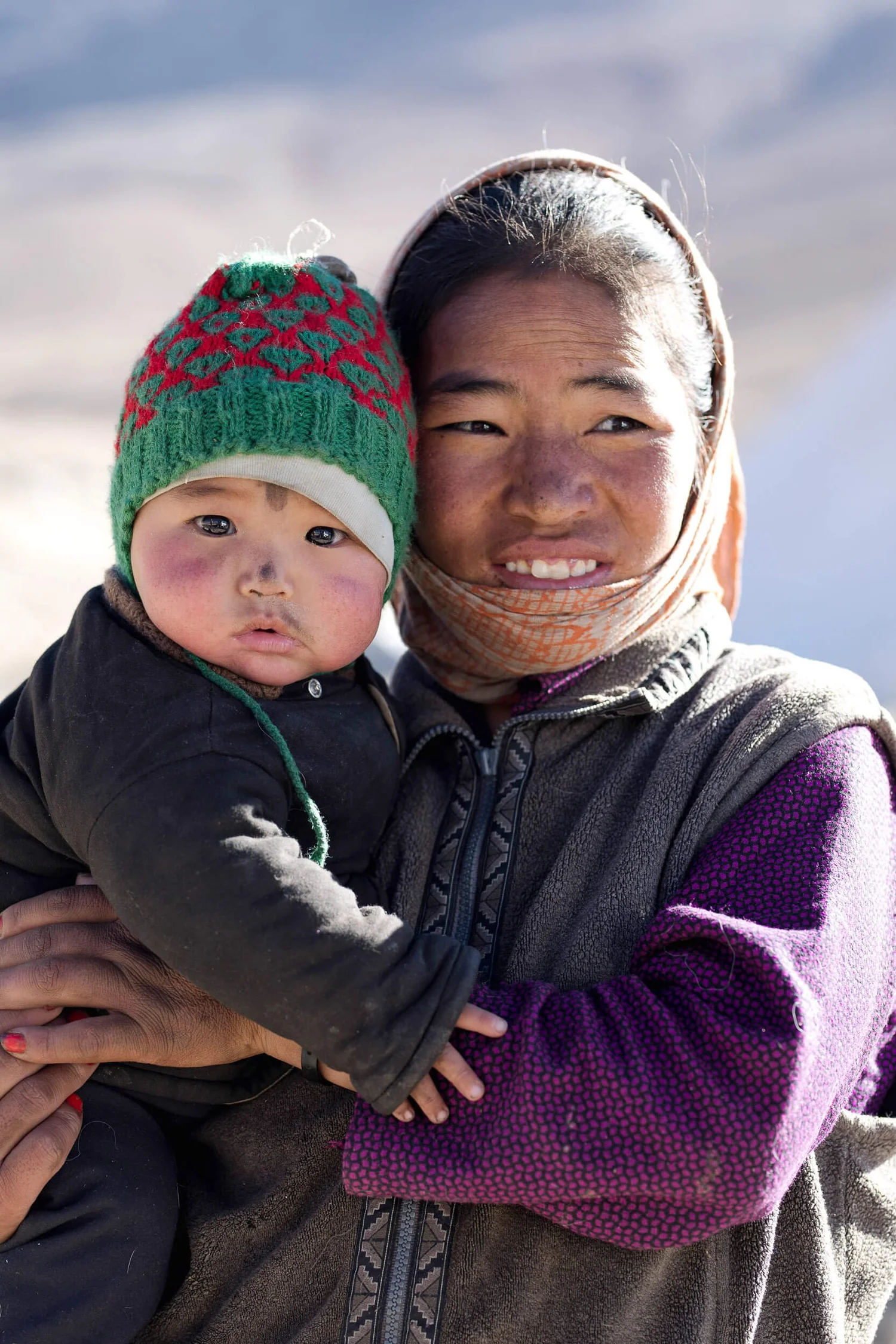
A Chang-pa mother and child at their encampment on the Chang-thang.
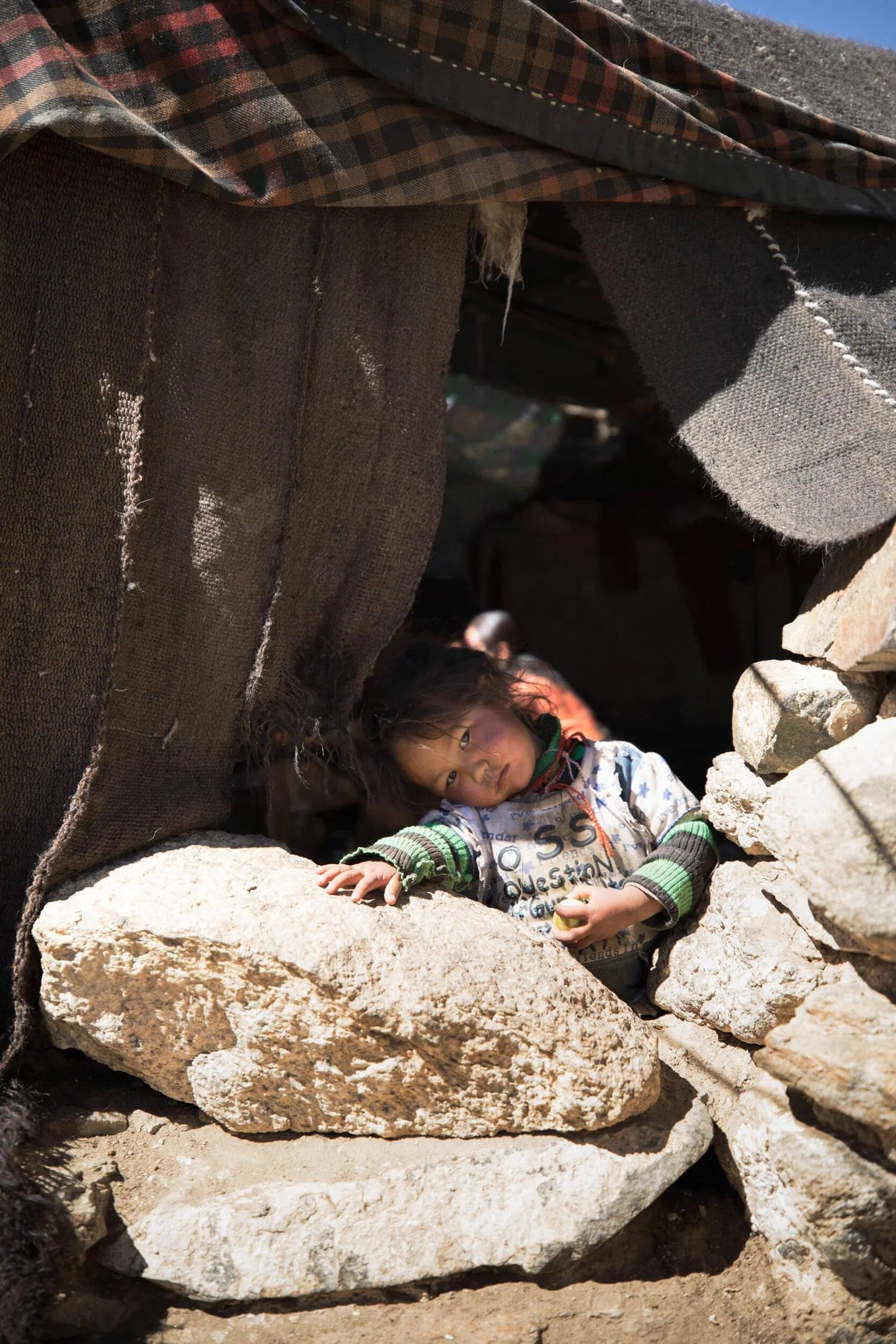
Grubby-faced infants stumble around the camps, layered up in woollen garments. With the state encouraging families to send children to school, it is often only the youngest who remain.
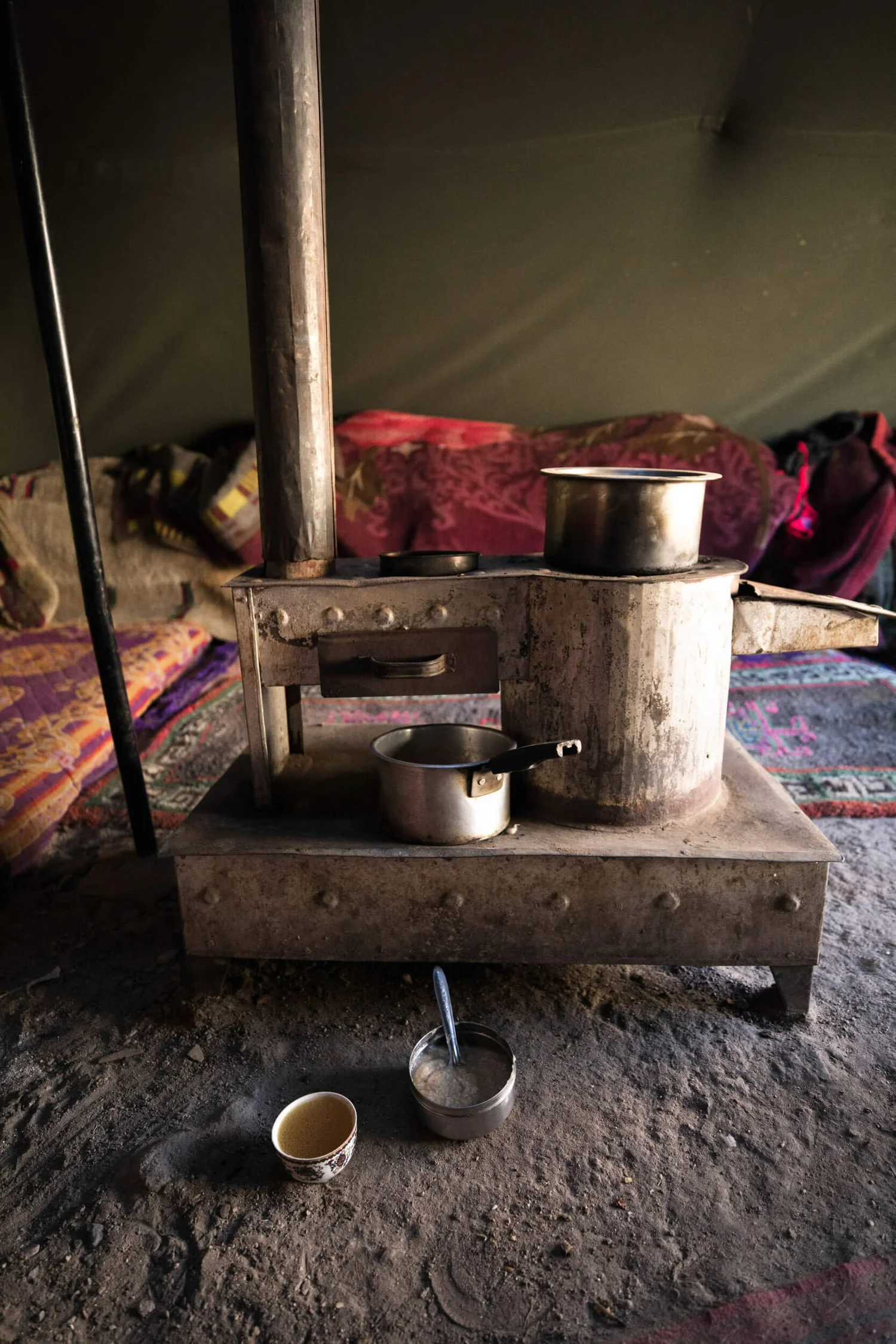
The Chang-pa live in rebos, yak-hair tents crafted from the hair of their own livestock, warm and windproof against winters that can drop to minus 35 degrees Celsius. Each consists of a single round room with a hearth at its centre, fuelled by the dried dung of their animals.
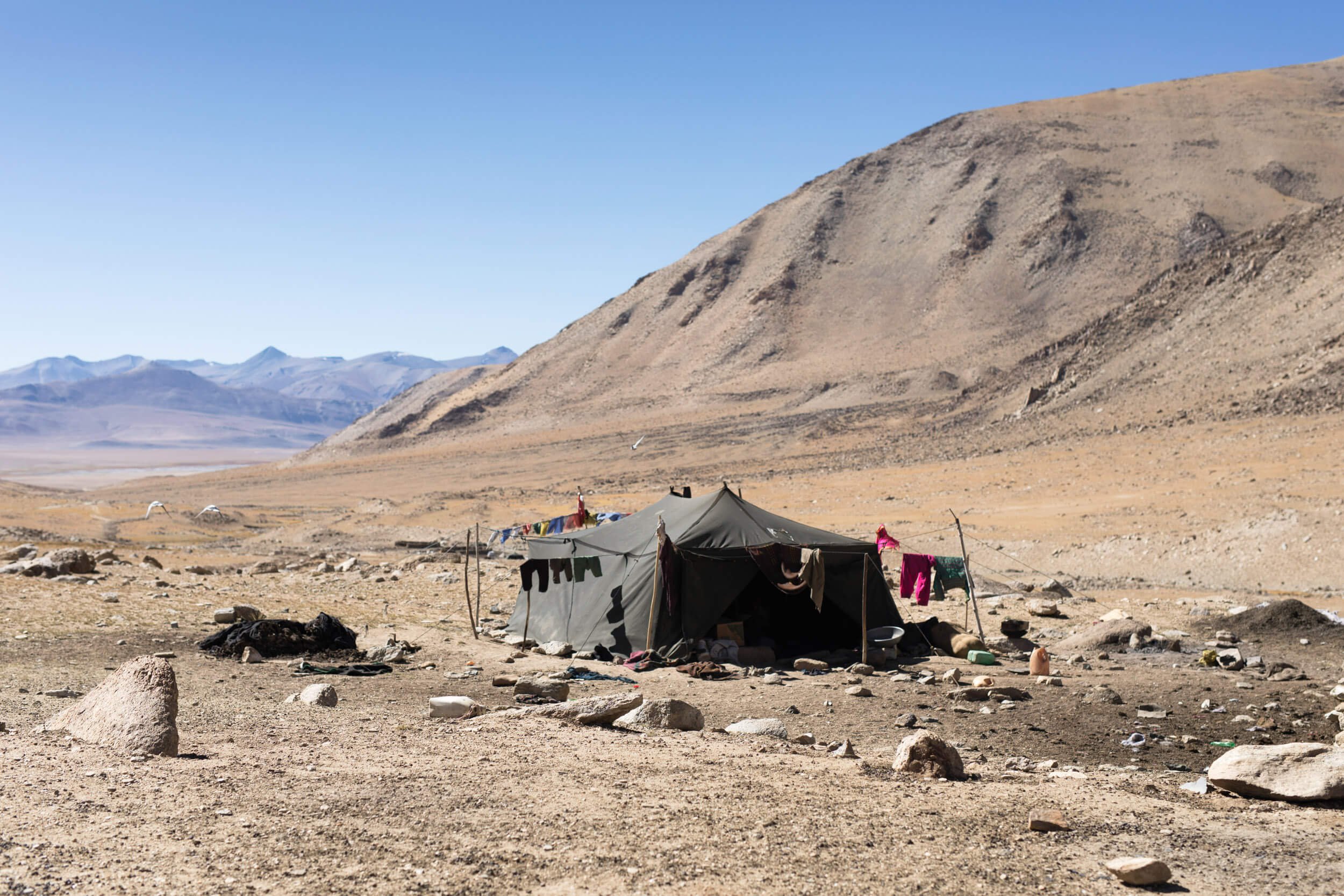
Pocketed throughout the sweeping plains are scatterings of Chang-pa encampments, each with only a handful of tented homes, usually between four and six.
Endemic to the Tibetan Plateau is the kiang, locally known as skang, the world's largest wild ass. Curious but careful creatures, they watch those who enter their habitat from afar, galloping across the dry land and kicking up dust trails in their wake.
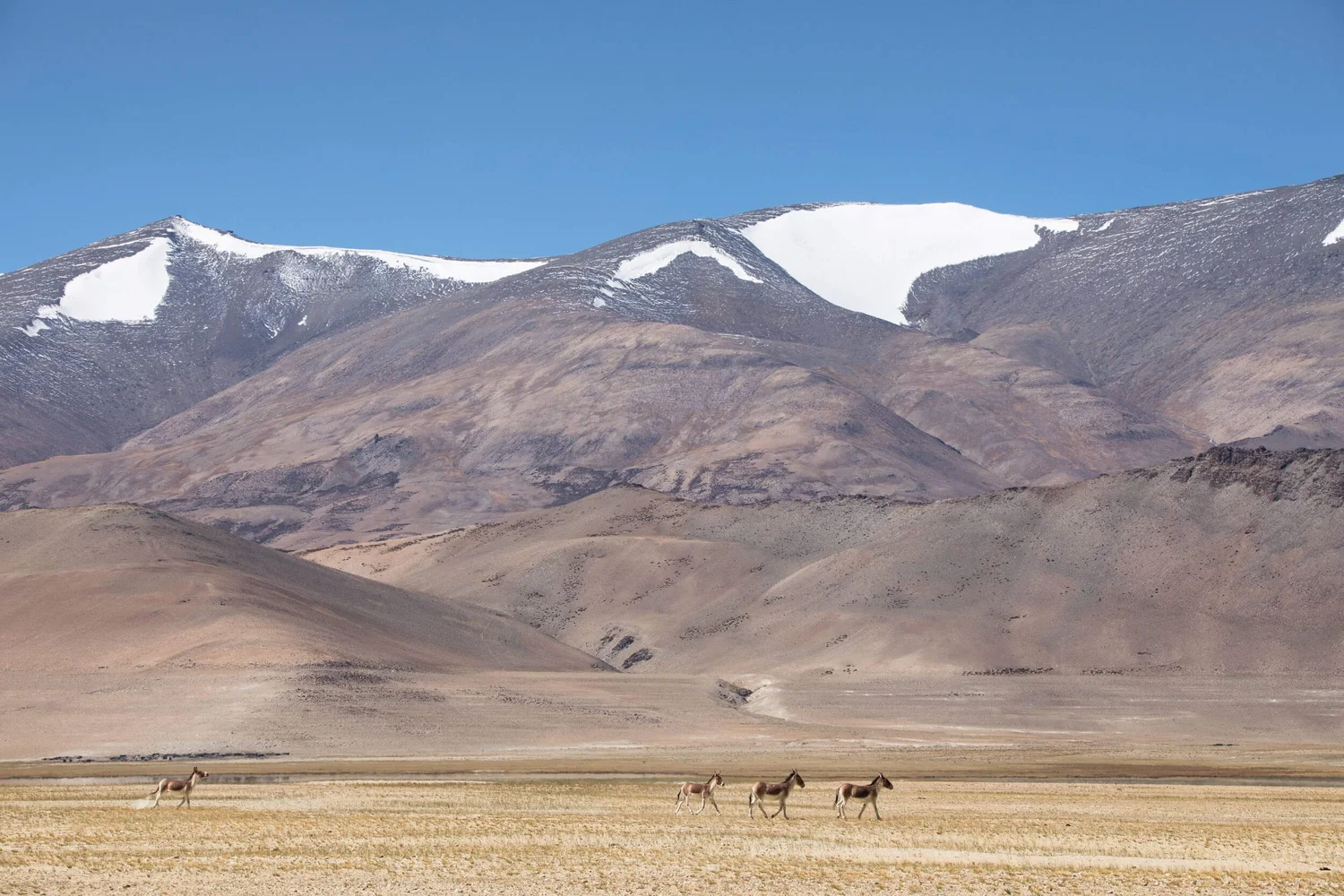
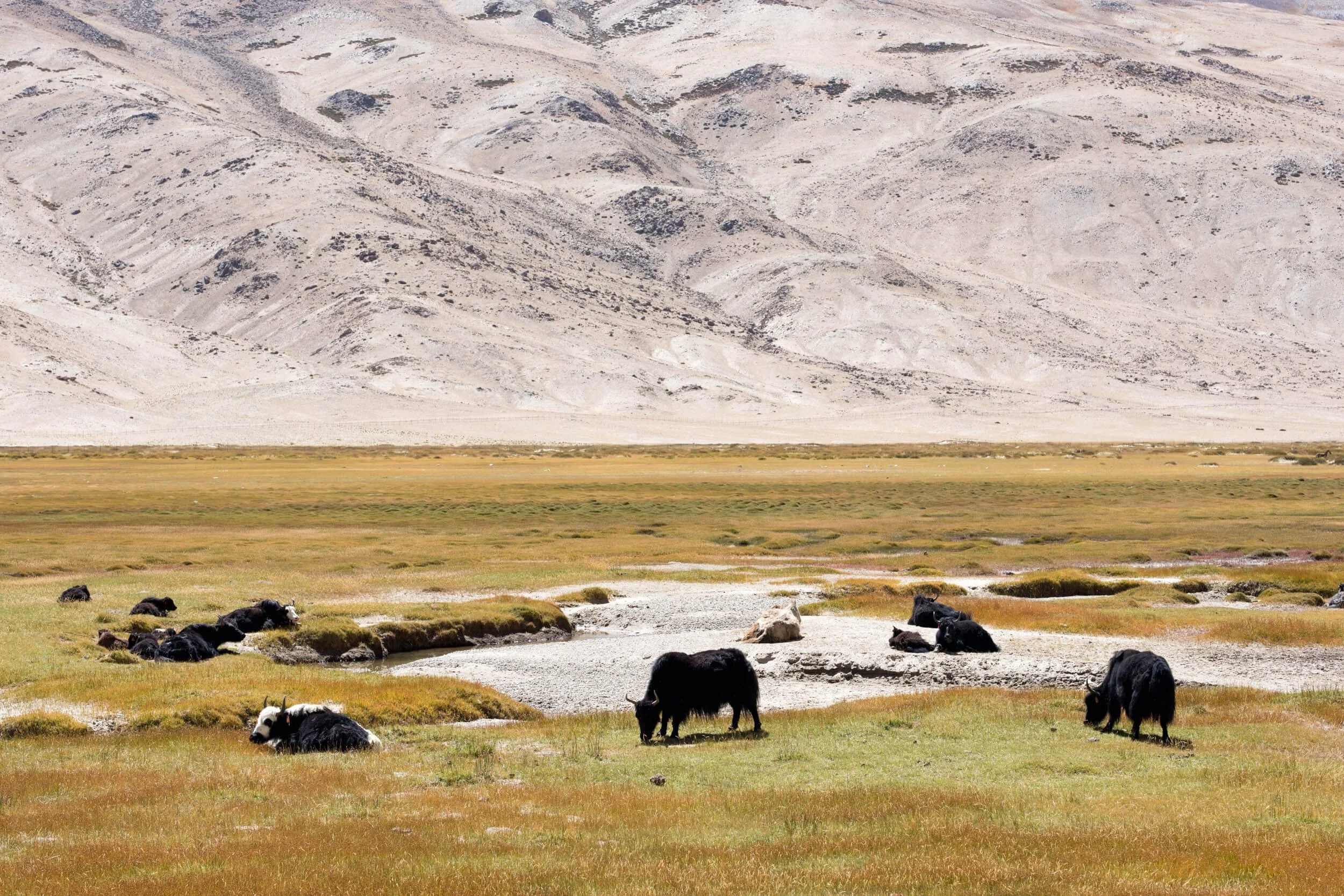
The Chang-pa's yaks are often left to wander unattended, sometimes many kilometres from camp, feeding on the sparse, tufty grasses and sedges.
Chapter III
Tsampa
Geographically isolated in the mysterious mountains of the so-called last Shangri-la, generations upon generations of Ladakhis have depended upon the nourishment of the region's produce to thrive through the harsh seasons at high altitude.
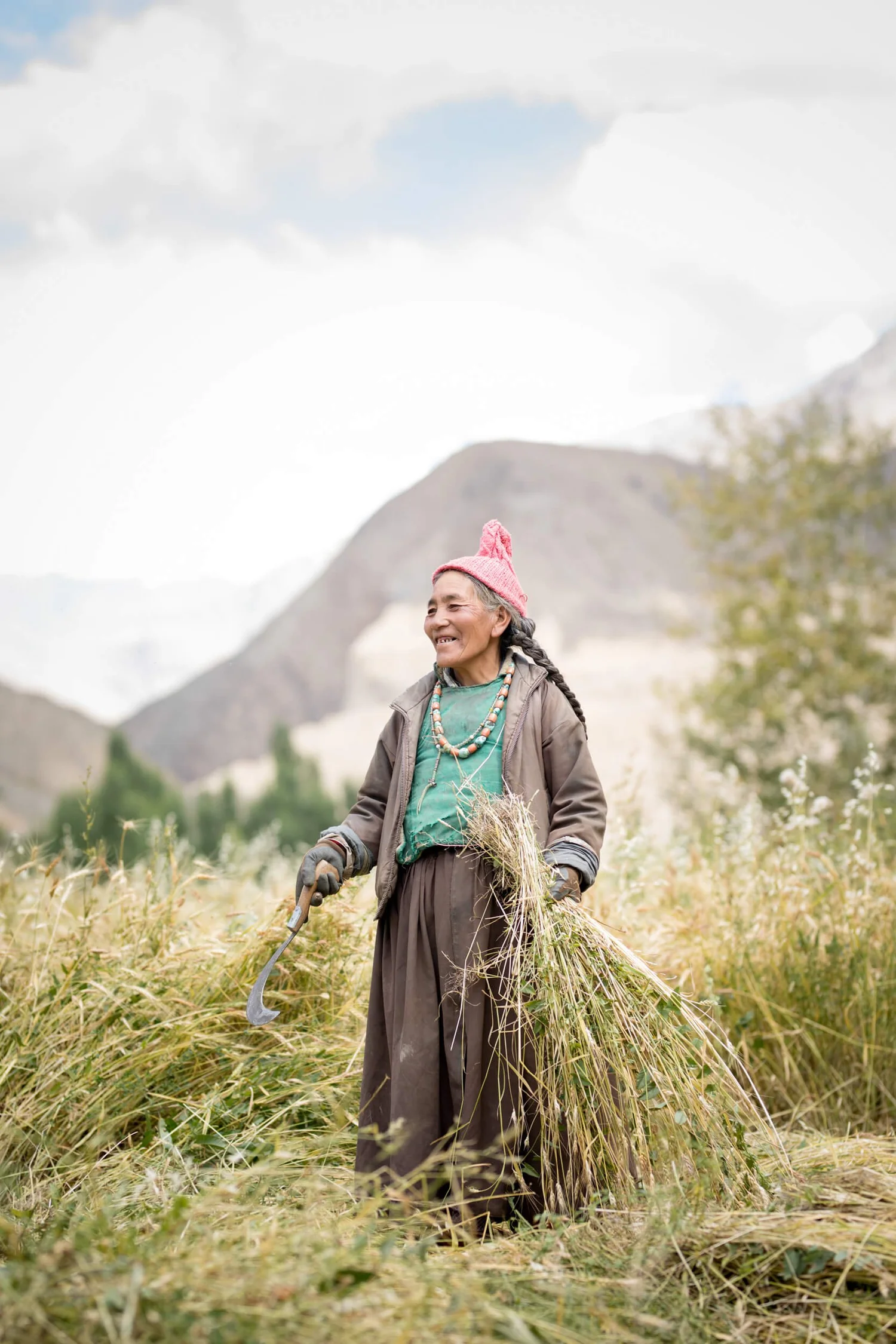
The work is demanding, but the well-natured workers appear contently absorbed by the task at hand.
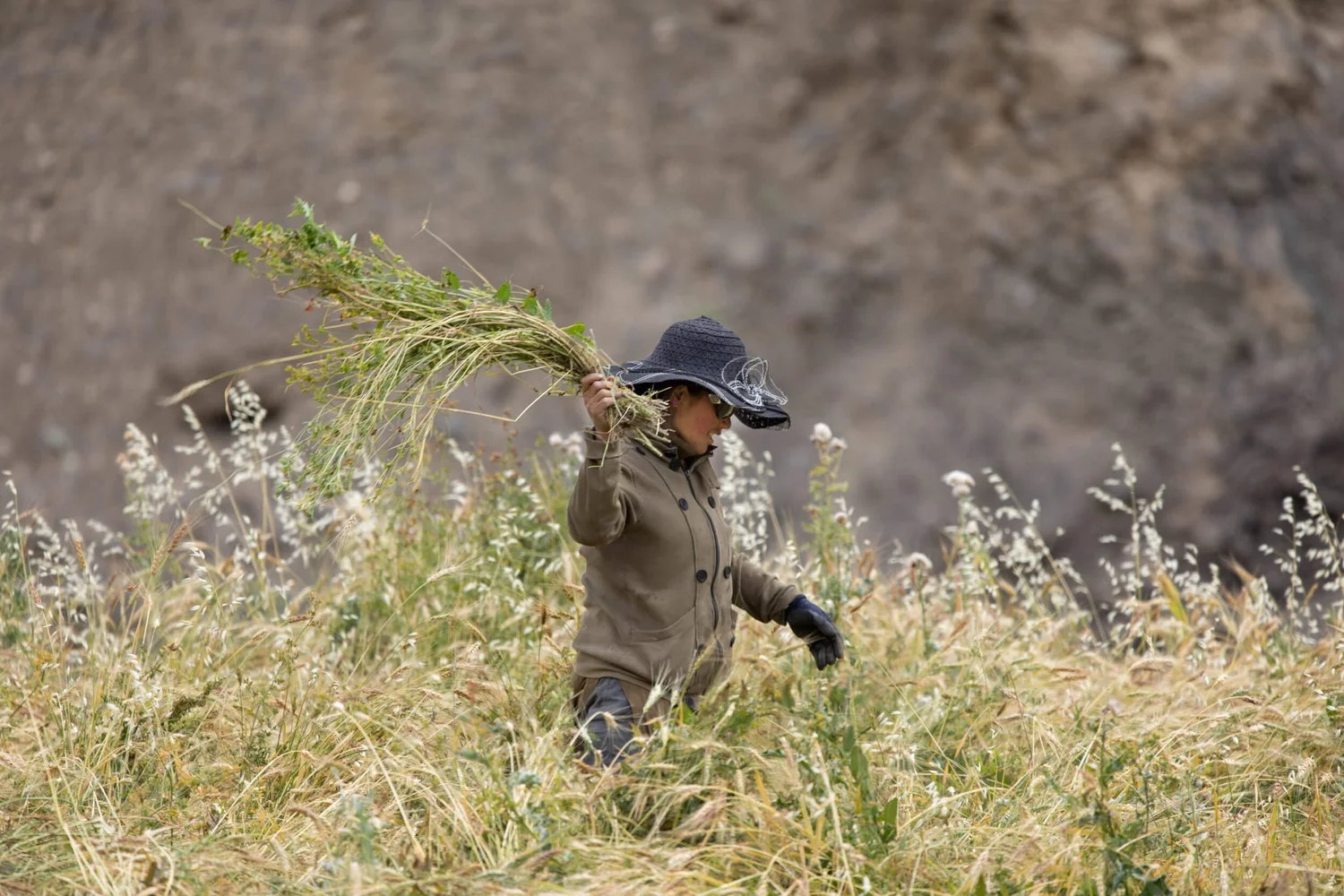
Fieldworkers, mostly women, thrash rhythmically through the barley with old, weathered scythes.
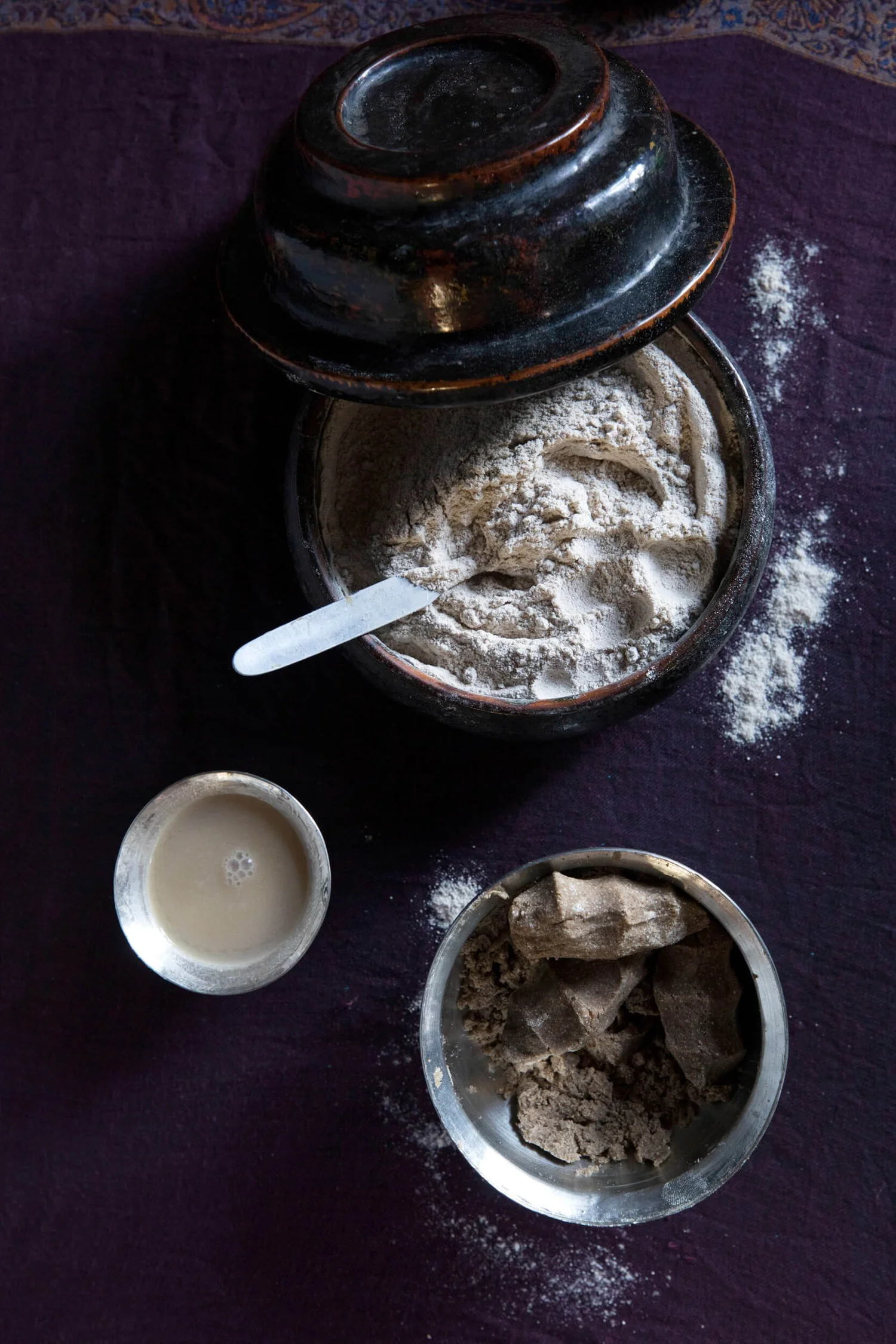
Dried on rooftops and ground by local water mills, parched barley, called ngamphe in Ladakhi and more widely known as tsampa, remains a staple across the region. Often served with butter tea, these hearty, calorific staples enable Ladakhis to endure winters that drop as low as minus 50 degrees Celsius.
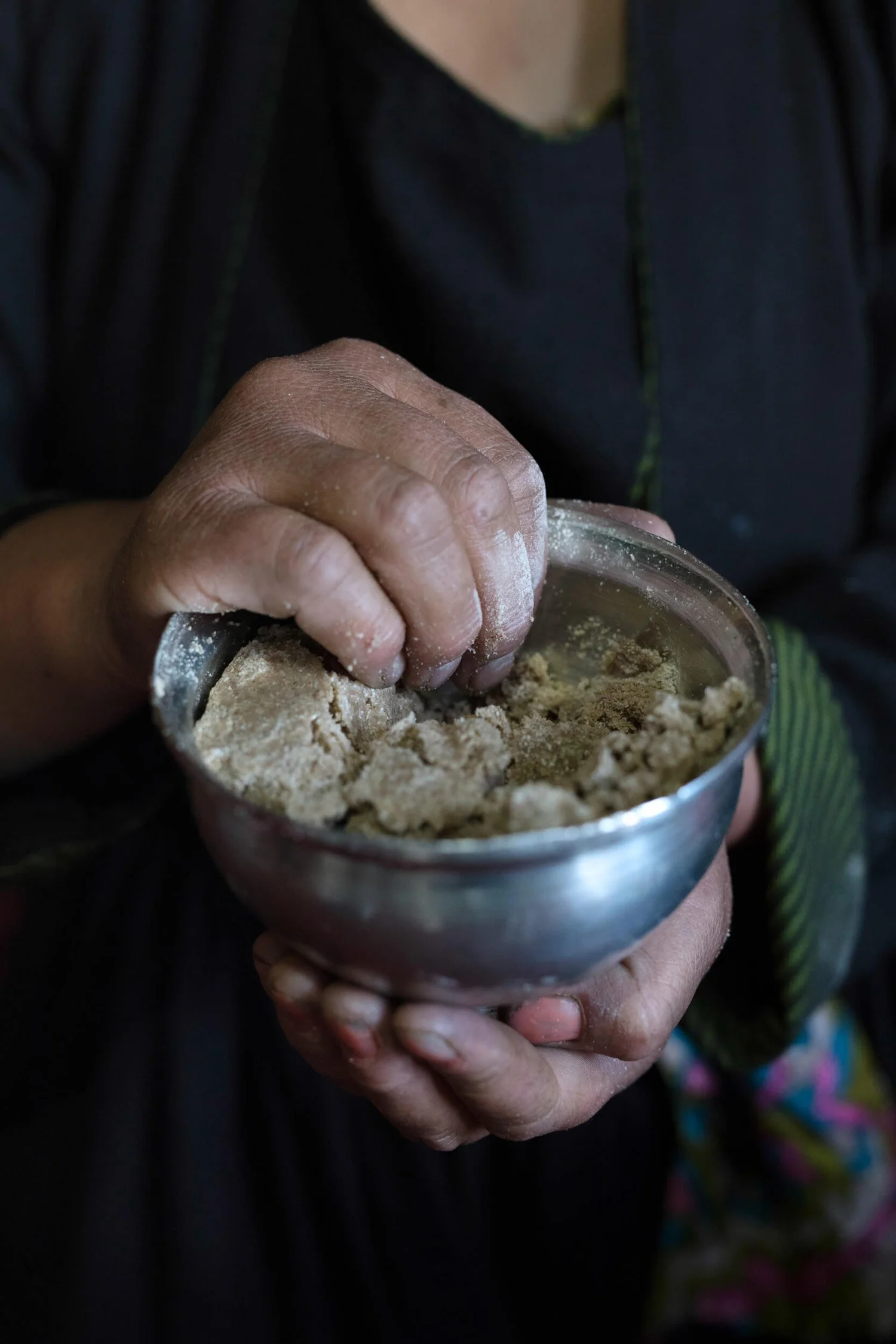
Kholak: tsampa worked into a dough with butter tea or chhang. Getting the proportions right is somewhat an art form.
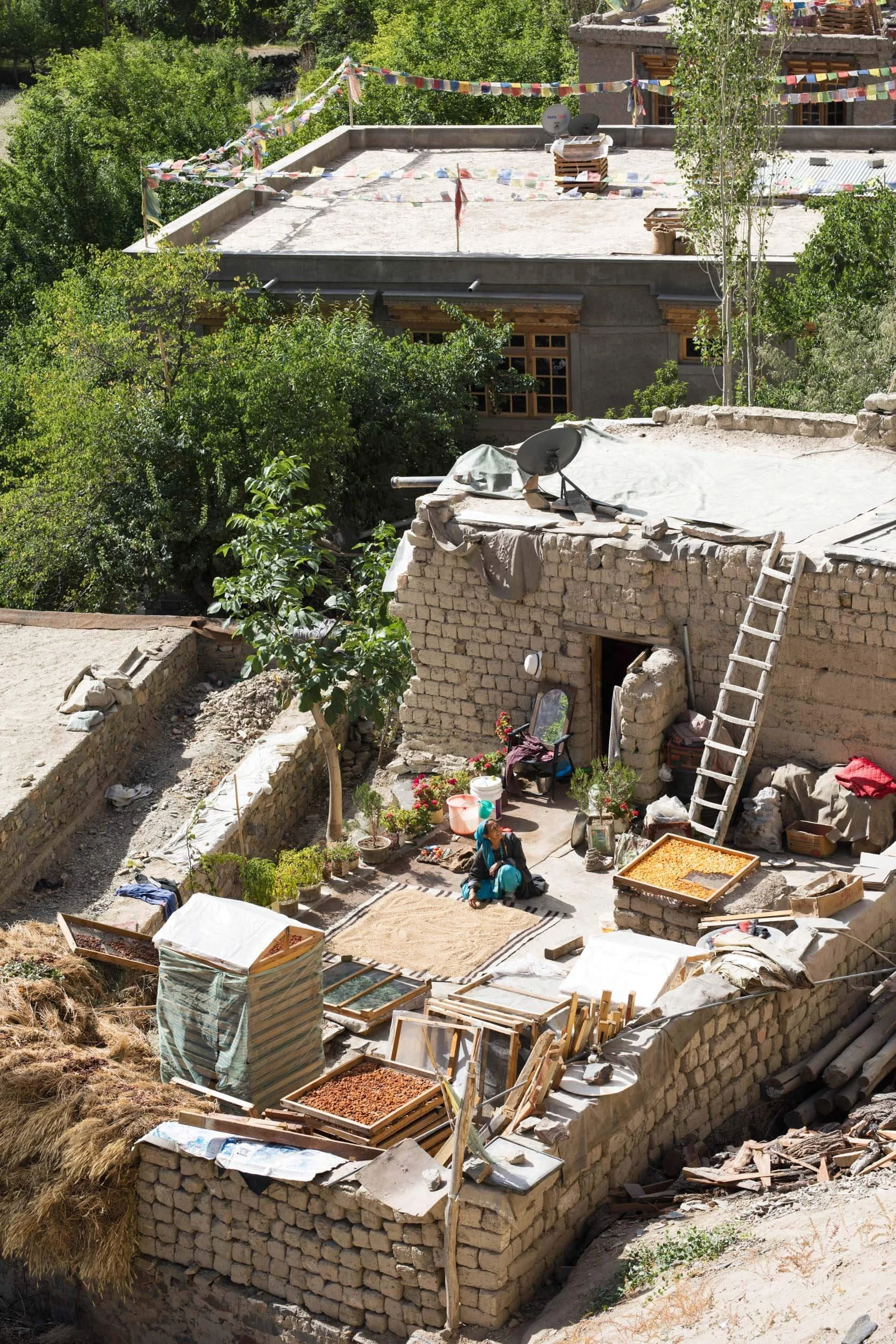
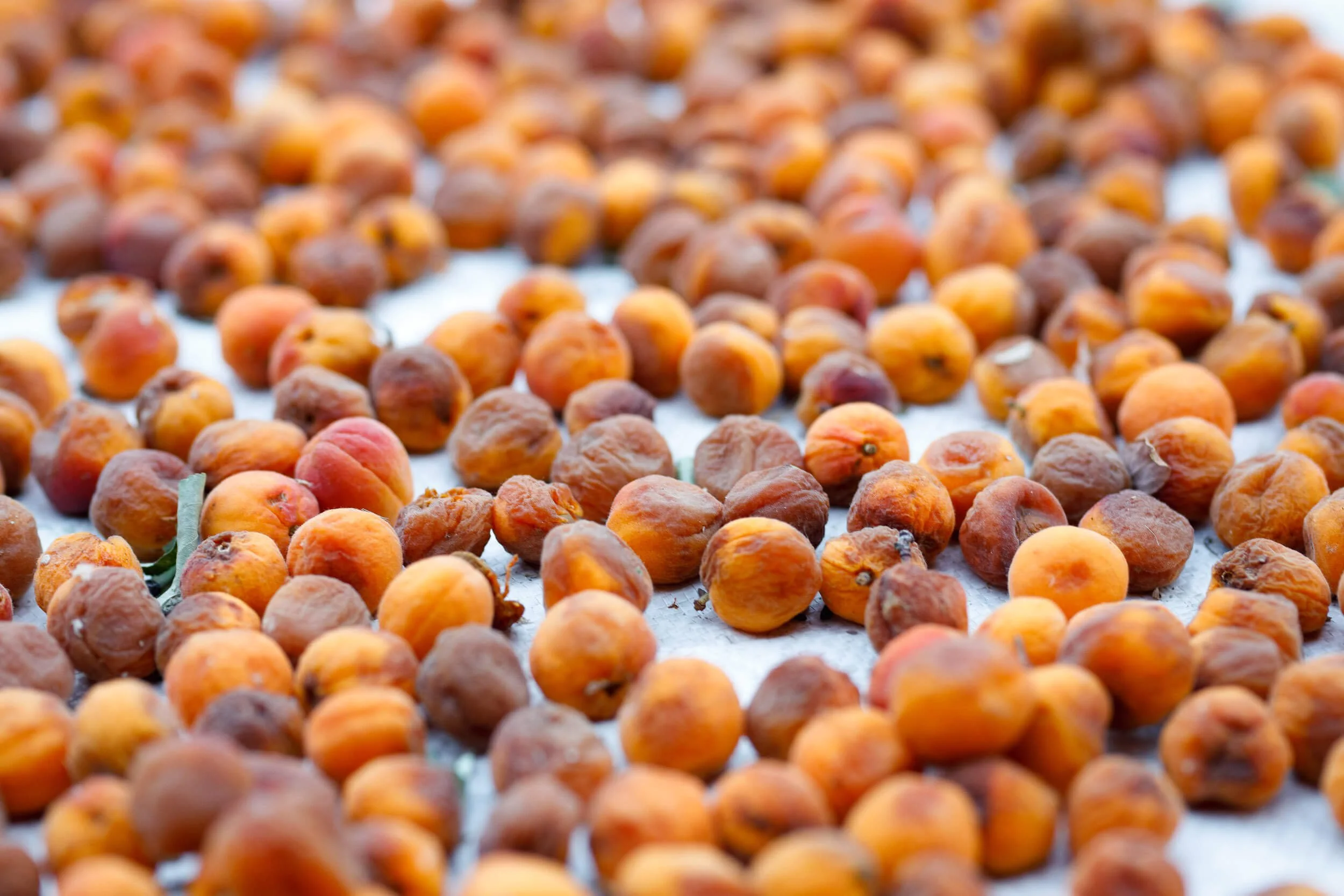
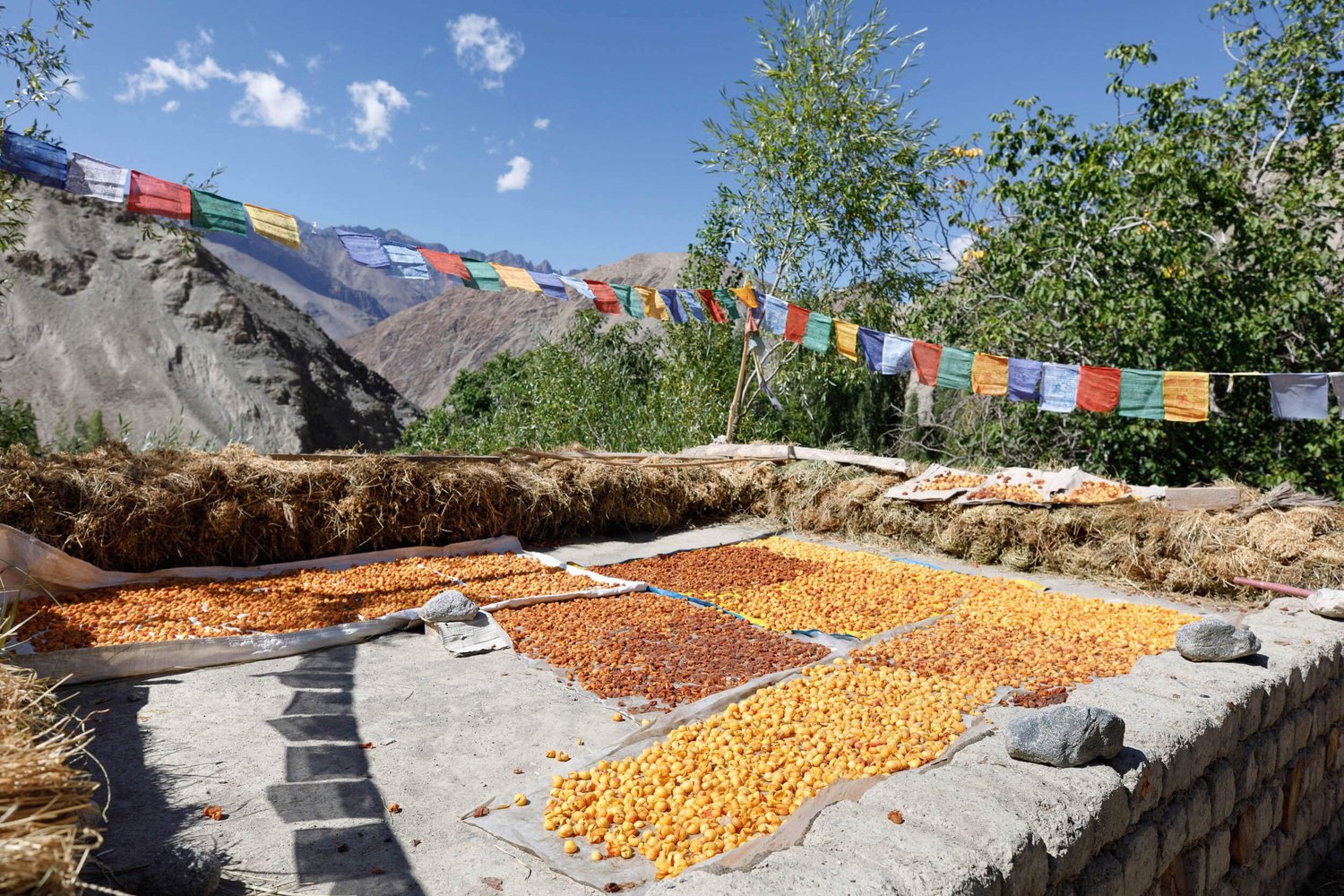
Apricots at various stages of dehydration, laid out to dry in the strong, high-altitude sun.
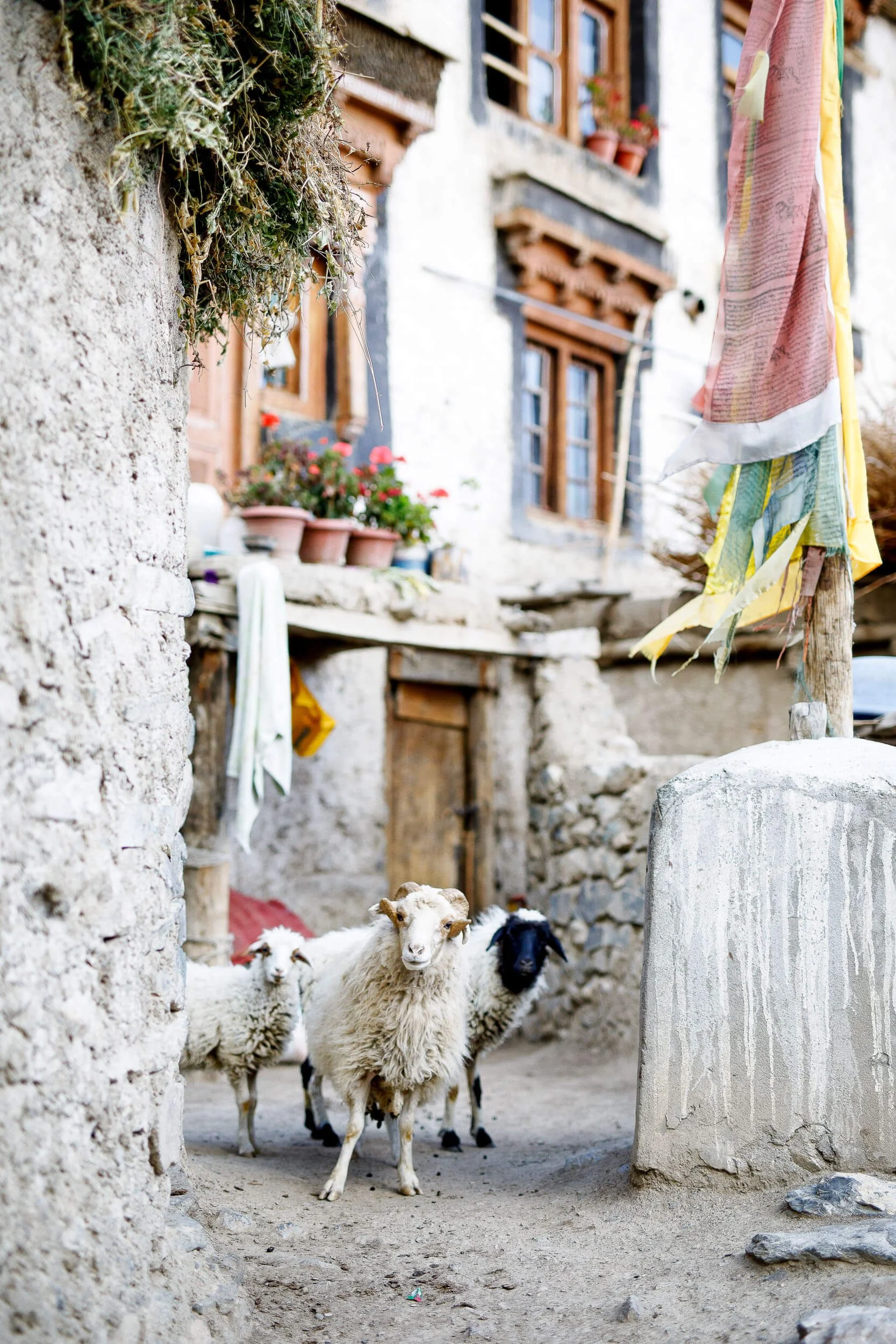
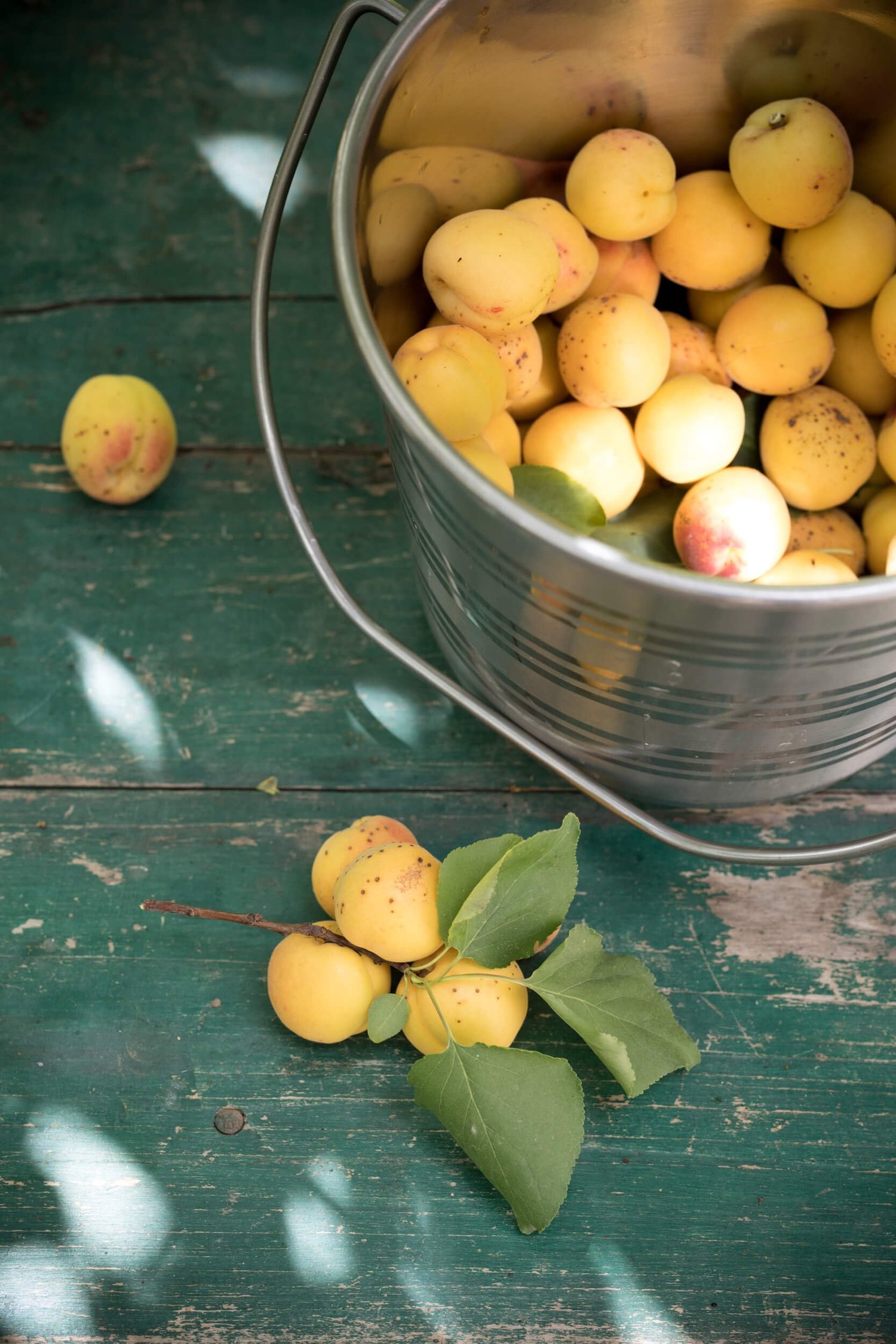
Towards the end of summer, the air turns sweet with the fragrant smell of apricots. With so little precipitation in the region, the flat roofs of Ladakhi homes are integral to the household, used to dry fruits, hay, bricks, wood and dung.
“By fostering a symbiotic relationship with the land and finding innovative solutions to their agrarian lives, the people of Ladakh have ensured a life that is rich and satisfies their needs”
The Land of High Passes · Another Escape Volume 10Chapter II
Living at the Roof of the World
For centuries, the nomadic herdspeople of the Chang-thang high plateau, known as the Chang-pa, have endured living in some of the hardest conditions on the planet. Where others would struggle to survive, they have thrived.
Animal husbandry is at the heart of the Chang-pa's livelihood, particularly the Chang-ra goats. The fine fleece combed from their undercoat, known as pashm, is the prized raw fibre of cashmere, and has shaped the political and social history of the region.
A Chang-pa mother and child at their encampment on the Chang-thang.